Month: December 2025
BEEfit: Ryan’s Favorite Oats… Fermented Oats
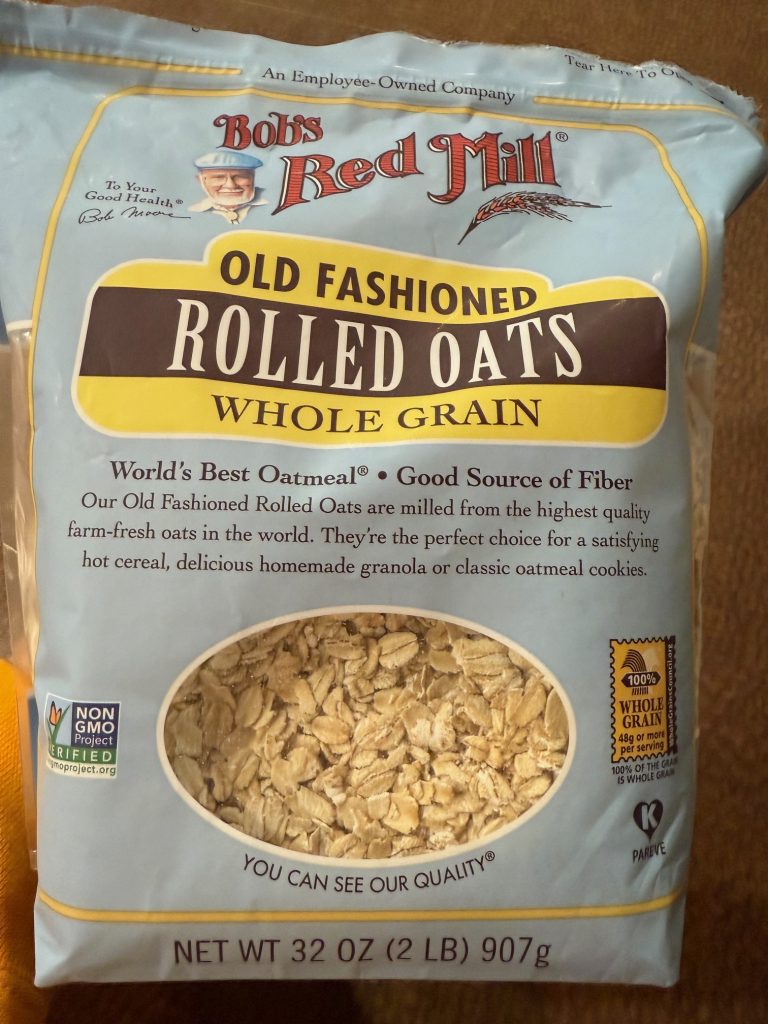
Ryan’s Favorite Oats!
Also a good idea…fermented oats oatmeal with Chocolate protein powder, PBfit, a tiny bit of all natural PB…this is super tasty. Add cocoa nibs and we’re other worldly…
How to make Fermented Oats
- Pour 1 cup of OATS in a glass bowl, and stir in 1 cup of lukewarm FILTERED WATER (boil and let cool down), and 2 Tablespoons 1.5 teaspoons of apple cider vinegar per cup of oats. Cover loosely, and leave overnight in the oven or a cabinet. Allow to soak for at least 7 hours and up to 24 hours.
- 2nd Step: Pour soaked oats into a mesh strainer and rinse with water. A fine strainer will work fine. This rinse seems to get rid of the ACV taste and additional phytic acid left on the oats.
- Portion into two bowls (or save some for later, ok in the refrigerator for up to a week).
- Why do fermented oats?
Phytic acid was discovered in 1903.[16] Phytic acid, mostly as phytate in the form of phytin, is found within the hulls of seeds, including nuts, grains and pulses.[1] In-home food preparation techniques can break down the phytic acid in all of these foods. Simply cooking the food will reduce the phytic acid to some degree. More effective methods are soaking in an acid medium, sprouting and lactic acid fermentation such as in sourdough and pickling.[17] [18] https://en.wikipedia.org/wiki/Phytic_acid
So you should ferment your oats before eating them if you want to increase their bioavailability, absorption, and offset the likelihood of distention. These are all good things, especially in terms of bioavailability, since you eat food for the nutrients they contain (though you might tell yourself otherwise).
BEEfit Ryan’s Green smoothie & PB Smoothie recipes
Ryan’s Green smoothie: (Good to add scoop of ALL-N-1 to: stir in after blending)
In a blender cup…
¼ c blueberries (frozen)
Sprig of mint
Kale, spinach green mix (about half way up container)
Fill water up to that line.
Scoop of vanilla whey smooth (add more if need for Protein totals–also can add Pre/post Protein=flavor and additional carbs.
Top off with water/frozen berries for flavor. (use less to none depending on carb needs)
Add flaxseed for healthy fats if needed.
**Add Non sweetened Greek Yogurt for additional fats, carbs, protein if wanted for needs. (get unflavored, no sugar, high probiotic version if using yogurt–fat is wanted here).
PB and chocolate smoothie:
½ or less Frozen banana (use less to none depending on carb needs)
H20 half way up blender cup (8 oz)
Heaping tbsp(s) (OR Small tsp if fat needs are less) of adam’s old fashioned peanut butter
1-2 servings of PBfit (amounts vary for needs of macros)
Scoop of chocolate Whey Smooth + 1 optional scoop of chocolate pre/post (both dotFIT)
A few cubes of ice, top with water and blend.
Should produce a 20-28 oz smoothie that satisfies macros!
(adjust quantities per your macros–ie, ¼ banana, less pb, less protein powder)
Six Most Important Resistance and Exercise Movements for Strength and Fitness
When it comes to building strength, improving fitness, and enhancing overall health, resistance training is a cornerstone of any effective workout program. Incorporating compound movements—exercises that engage multiple muscle groups and joints—can maximize efficiency and results. Below are the six most important resistance and exercise movements that should form the foundation of your training routine.
🐝 1. Squat
The squat is often referred to as the “king of all exercises” because it targets the lower body and core while also engaging the upper body for stability. It primarily works the quadriceps, hamstrings, glutes, and lower back.
👉Why it’s important**: Squats improve lower body strength, enhance mobility, and promote functional fitness for everyday activities like sitting, standing, and lifting.
– **Variations**: Bodyweight squats, goblet squats, barbell back squats, front squats, suspension trainer squats, box squats.
🐝 2. Deadlift
The deadlift is a full-body movement that primarily targets the posterior chain, including the glutes, hamstrings, lower back, and traps. It also engages the core, grip strength, and upper back.
👉Why it’s important**: Deadlifts build raw strength, improve posture, and enhance your ability to lift heavy objects safely in daily life.
– **Variations**: Conventional deadlift, sumo deadlift, Romanian deadlift, trap bar deadlift (if your knee is going forward in any of these variations…it is not a dead lift)
🐝 3. Bench Press
The bench press is a classic upper-body exercise that focuses on the chest, shoulders, and triceps. It also engages the core and back for stability.
👉Why it’s important**: This movement builds upper body strength and muscle mass, which is essential for pushing movements and overall upper body power.
– **Variations**: Flat bench press, incline bench press, dumbbell bench press, close-grip bench press.
🐝 4. Pull-Up/Chin-Up
Pull-ups and chin-ups are bodyweight exercises that target the back, biceps, and shoulders. They require significant upper body strength and control.
👉Why it’s important**: These exercises improve upper body pulling strength, enhance grip strength, and promote better posture by strengthening the back muscles.
– **Variations**: Wide-grip pull-ups, chin-ups (palms facing you), assisted pull-ups, weighted pull-ups, lat machines.
🐝 5. Overhead Press
The overhead press (or shoulder press) is a vertical pushing movement that targets the shoulders, triceps, and upper chest. It also engages the core for stability.
👉Why it’s important**: This exercise builds shoulder strength and stability, which is crucial for overhead activities and overall upper body function.
– **Variations**: Barbell overhead press, dumbbell shoulder press, push press, Arnold press.
🐝 6. Row
Rows are essential for balancing out pushing movements like the bench press and overhead press. They target the back, biceps, and rear shoulders, while also engaging the core.
👉Why it’s important**: Rows improve posture, strengthen the back, and help prevent muscle imbalances caused by excessive pushing exercises.
– **Variations**: Barbell rows, dumbbell rows, inverted rows, cable rows.
🐝 Why These Movements Matter
These six exercises form the foundation of a well-rounded resistance training program. They are compound movements, meaning they work multiple muscle groups simultaneously, making them highly efficient for building strength, improving mobility, and burning calories. Additionally, they mimic real-life movements, enhancing functional fitness and reducing the risk of injury.
✅ Tips for Success
– **Focus on form**: Proper technique is crucial to prevent injury and maximize results.
– **Progress gradually**: Start with lighter weights or bodyweight variations and gradually increase resistance as you get stronger.
– **Balance your program**: Incorporate both pushing and pulling movements to avoid muscle imbalances.
– **Rest and recover**: Allow adequate recovery time between workouts to let your muscles repair and grow.
By incorporating these six essential movements into your routine, you’ll build a strong, functional, and resilient body that’s prepared for both the gym and the demands of daily life.
💥Bonus: Planks
Planks are excellent for your abdominals and core stability.
👉Why it’s important: planks help improve spinal health and performance in just about every aspect of movement… they are a central part of a well rounded abdominal program.
Additional consideration should be given to the side plank, reverse crunch, and Russian twist among other valuable abdominal motions.
🔥 formulating the proper program for where you are at is exactly what BEEfit does!
Schedule your assessment today and be well on your way to the program designed just for you!
#skagitcounty #personaltrainer #gym #fatloss #wellness #skagitcounty #skagitvalley #womenshealth #24/7 #local #allnatty #bodybuilding #sportsperformance #pullups #resistancetraining
Protein is essential for your metabolism and longevity…less than 30% of adults consume enough protein to support their bodies…
Protein is essential for your metabolism and longevity…less than 30% of adults consume enough protein to support their bodies…On average, the goal should be to consume 1 g of protein per pound of desired body composition…Your needs for protein can be higher due to age, fat loss strategy, performance needs…Example, you weigh 200 lbs, but would be healthier at 180 lbs and need to lose 20 pounds of fat. Your daily protein needs would be 180-200 grams per day and doing tons of cardio is not the best method for fat loss.
When people say that their metabolism slowed down, what they really mean is that their muscle mass has decreased. This leads to a lower ability to absorb insulin (carbs), less strength, weaker bones, and greater difficulty with everyday movement patterns and ultimately–a loss of independence and the ability to do activities that they enjoy.
With a properly designed program and sound nutritional approach, we can improve our health and longevity to add quality years to our lives.
BEEfit gives you the keys to your metabolic health and longevity with our HST (Hypertrophy Strength Training) system–a personalized approach to muscle and strength promotion and fat reduction! No shortcuts, just SURE CUTS!
Metabolism Breakdown
Where calories are burned:
70% Basal Metabolism (muscle = big factor!)
15% NEAT (movement)
10% TEF (digesting food)
5% Exercise
→ NEAT + MUSCLE = real fat loss drivers
🔥 SIMPLE TAKEAWAYS
Protein first, every meal
Walk after meals
Drink water like it’s your job
Lift 3–5x/week
Supplements cover nutrient gaps
Consistency > perfection
Here is a helpful link for protein per 100 grams of common protein sources…
If you want a personalized guide and program to improve your metabolism, increase longevity, improve movement patterns, and help you focus on the proper protocols–BEEfit is here to help! We offer nutritional guidance, personal training, semi-private personal training, and individualized training programs via our training app! We have plans for every budget!
Ready to eliminate the guess and stress work so you can commit to your best work?
Let’s BEEfit!
Massage me to schedule your FREE consultation!
🐝 BEEfit Protein Guide
Protein Content per 100 g
Purpose: Help members and coaches quickly estimate protein intake using common foods.
Values are approximate. Raw weight unless noted.
🥩 ANIMAL PROTEINS (Highest Quality)
Red Meat
- Beef (sirloin, lean): 22 g
- Beef (90% lean ground): 20 g
- Bison: 22 g
- Lamb (leg): 20 g
- Pork loin: 22 g
Poultry
- Chicken breast (skinless): 23 g
- Chicken thigh (skinless): 18 g
- Turkey breast (skinless): 24 g
- Ground turkey (93% lean): 22 g
Fish & Seafood
- Salmon (Atlantic): 21 g
- Tuna (yellowfin): 24 g
- Cod: 18 g
- Halibut: 19 g
- Shrimp: 24 g
- Sardines: 25 g
🥚 DAIRY & EGGS
- Whole egg: 13 g
- Egg whites: 11 g
- Greek yogurt (non-fat): 10 g
- Cottage cheese (low-fat): 12 g
- Milk (whole): 3 g
- Cheddar cheese: 25 g
- Parmesan: 36 g
🌱 PLANT-BASED PROTEINS
Soy & Legumes
- Tofu (firm): 15 g
- Tempeh: 19 g
- Edamame: 12 g
- Lentils (cooked): 9 g
- Chickpeas (cooked): 9 g
- Black beans (cooked): 9 g
Grains, Nuts & Seeds
- Oats (dry): 13 g
- Quinoa (cooked): 4 g
- Almonds: 21 g
- Peanuts: 26 g
- Hemp seeds: 31 g
- Pumpkin seeds: 30 g
💪 PROTEIN SUPPLEMENTS
- Whey isolate: 85–90 g
- Whey concentrate: 70–80 g
- Casein: 75–80 g
- Plant protein blend: 65–75 g
- Collagen peptides: 90 g
(Low leucine — not ideal alone for muscle building)
🧠 BEEfit COACHING NOTES
- Aim for 30–50 g protein per meal to support hypertrophy.
- Animal proteins are the most efficient for muscle protein synthesis.
- Plant proteins often require larger portions or combinations.
- Protein needs increase with lean mass, training frequency, and age.
- You cannot out-train under-eating protein.
🐝 BEEfit | Strength • Hypertrophy • Longevity
Fuel muscle. Build strength. Age powerfully.
🐝 What Does 30 g of Protein Look Like?
30 g of protein per meal is the minimum target to stimulate muscle protein synthesis for most adults.
🥩 Animal-Based Options
- Chicken breast (cooked) → ~4.5 oz (130 g)
- Turkey breast (cooked) → ~4 oz (115 g)
- Lean beef (sirloin, cooked) → ~5 oz (140 g)
- Salmon (cooked) → ~5 oz (140 g)
- Tuna (canned, drained) → ~1 large can (5 oz)
- Shrimp → ~6 oz (170 g)
🥚 Eggs & Dairy
- Whole eggs → 4 large eggs
- Egg whites → 1½ cups (about 8–9 whites)
- Greek yogurt (non-fat) → 3 cups
- Cottage cheese (low-fat) → 2½ cups
- Cheese (cheddar) → 4 oz (high fat — use strategically)
🌱 Plant-Based Options
(larger portions required)
- Tofu (firm) → 7 oz (200 g)
- Tempeh → 5 oz (140 g)
- Lentils (cooked) → 3½ cups
- Chickpeas (cooked) → 3 cups
- Edamame → 2½ cups
- Quinoa (cooked) → 7½ cups (not ideal alone)
💪 Supplements
- Whey isolate → 1 scoop
- Whey concentrate → 1¼ scoops
- Plant protein powder → 1½ scoops
- Collagen peptides → NOT sufficient alone (low leucine)
🧠 BEEfit Coaching Notes
- Protein quality matters — animal sources hit the leucine threshold faster.
- Plant-based athletes should combine sources or increase total intake.
- Aim for 30–50 g per meal, especially post-training and at breakfast.
- If you miss protein early in the day, you’re playing catch-up all night.
🐝 BEEfit | Build Muscle. Burn Fat. Age Strong.
dotFIT link & 20% off👇